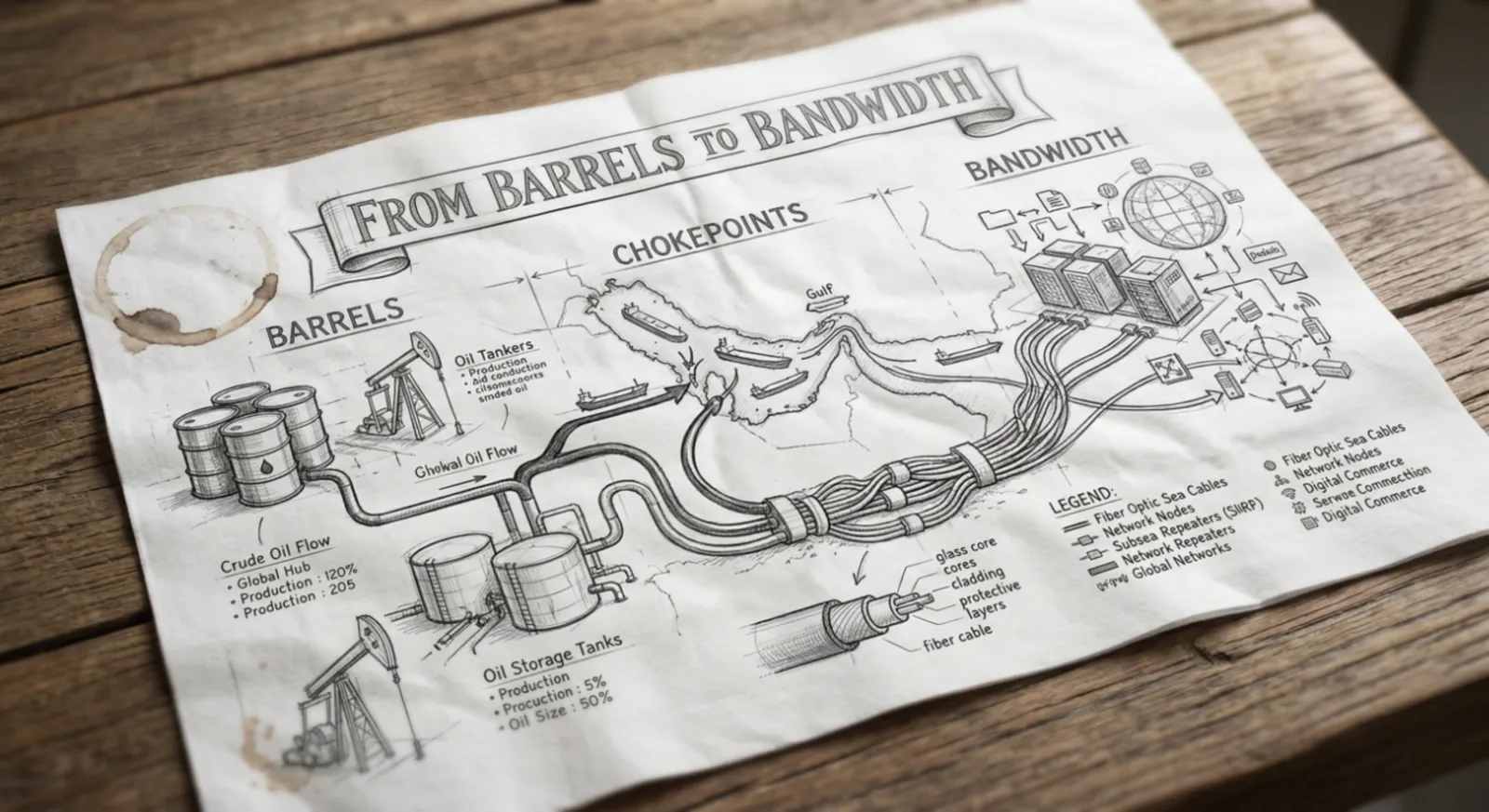
For decades, the strategic vulnerability of the Gulf was measured in barrels. Control the Strait of Hormuz, and you control 20 percent of the world's oil supply. That calculus has not changed. But layered on top of it, largely unnoticed, a second dependency has taken root, one that may prove equally consequential. The Gulf states have staked their post-oil futures on becoming the world's next great hub for artificial intelligence and data infrastructure. Billions have been committed. Hyperscale campuses are under construction. Government strategies have been published. And the physical infrastructure on which all of it depends now passes through two active war zones.
Ethos Chain's assessment is that digital infrastructure in the Gulf has become as strategically vulnerable as energy infrastructure, but neither governments nor investors are treating it with the same seriousness. That gap between ambition and resilience is where systemic risk lives.
The Bet
The scale of commitment is not in question. Abu Dhabi has committed $3.5 billion to become the world's first fully AI-enabled government by 2027. The $500 billion Stargate project, a 10 square mile AI campus in Abu Dhabi operated with 5 gigawatts of power and hosting up to 500,000 Nvidia chips annually, is set to begin operations in 2026. Saudi Arabia's Public Investment Fund launched HUMAIN and awarded a $2.7 billion contract for the 480MW Hexagon data centre in Riyadh. Amazon, Microsoft, and Google spent years building data centre capacity across the region, betting that geographic centrality, cheap energy, and sovereign capital would make the Gulf an irresistible node in the global compute network.
The thesis was sound. The Gulf sits at the crossroads of Europe, Asia, and Africa. It has energy surplus to power the most demanding AI workloads. It has sovereign wealth funds willing to co-invest at scale. What it does not have is control over the physical corridors that connect those data centres to the rest of the world.
The Chokepoints
Seventeen submarine cables pass through the Red Sea, carrying the majority of data traffic between Europe, Asia, and Africa. Fibre-optic routes serving the Gulf's eastern coast transit the Strait of Hormuz. Both passages are now effectively closed to commercial traffic. On 3 March 2026, the Islamic Revolutionary Guard Corps declared Hormuz shut and threatened to "set ablaze" any vessel attempting passage. Houthi-led disruptions had already reduced Suez Canal transit by over 60 percent. The two chokepoints that defined oil geopolitics for half a century are now defining data geopolitics, and the consequences are arriving faster than anyone anticipated.
The most immediate casualty is the 2Africa Pearls cable. This extension of Meta's 45,000 kilometre submarine network was scheduled to connect Oman, the UAE, Qatar, Saudi Arabia, Bahrain, Kuwait, Iraq, Pakistan, and India to the broader 2Africa system in 2026. On 12 March, Alcatel Submarine Networks, the French state-owned contractor laying the cable, declared force majeure, stating it could no longer safely operate in the Persian Gulf. Its installation ship remains stranded in the port of Dammam. Landing stations that have not yet been connected may remain unfinished indefinitely. Other projects, including the SEA-ME-WE 6 club cable and Ooredoo's Fibre In Gulf system, have also been suspended.
This disruption will not be absorbed and forgotten. New cable capacity that was expected to come online in 2026 and 2027 is now indefinitely delayed. The Gulf's data connectivity is actively degrading.
The Escape Routes That Are Not Escapes
The response from Gulf capitals has been predictable: build around the problem. Saudi Arabia, Qatar, and the UAE are each financing overland data corridors designed to bypass the maritime chokepoints. The planned routes run through Syria, Iraq, and East Africa, connecting to European networks via terrestrial fibre rather than undersea cable.
Ethos Chain observes a pattern here that should concern strategic planners. The corridors being designed as alternatives to maritime vulnerability would themselves pass through Syria, where infrastructure was systematically destroyed over a decade of civil war. Through Iraq, where institutional fragility and militia activity remain endemic. Through Sudan, where a catastrophic civil war has displaced millions and destroyed national systems. Through Ethiopia, where ethnic conflict and political instability have repeatedly severed communications infrastructure.
The logic of diversification is correct. The execution assumes a stability in transit countries that does not exist. Replacing a maritime chokepoint with a terrestrial one through contested states is not resilience. It is the relocation of vulnerability.
The Systemic Failure Nobody Is Mapping
What makes this a systemic risk rather than a sectoral inconvenience is the convergence of dependencies. The Gulf's AI ambitions are not speculative. They are funded, under construction, and in several cases operational. Abu Dhabi's Khazna Data Centers holds over 70 percent of the UAE's data centre market. The Stargate campus will house some of the most advanced compute infrastructure outside the United States. Saudi Arabia's HUMAIN initiative is designed to establish sovereign AI capability at national scale.
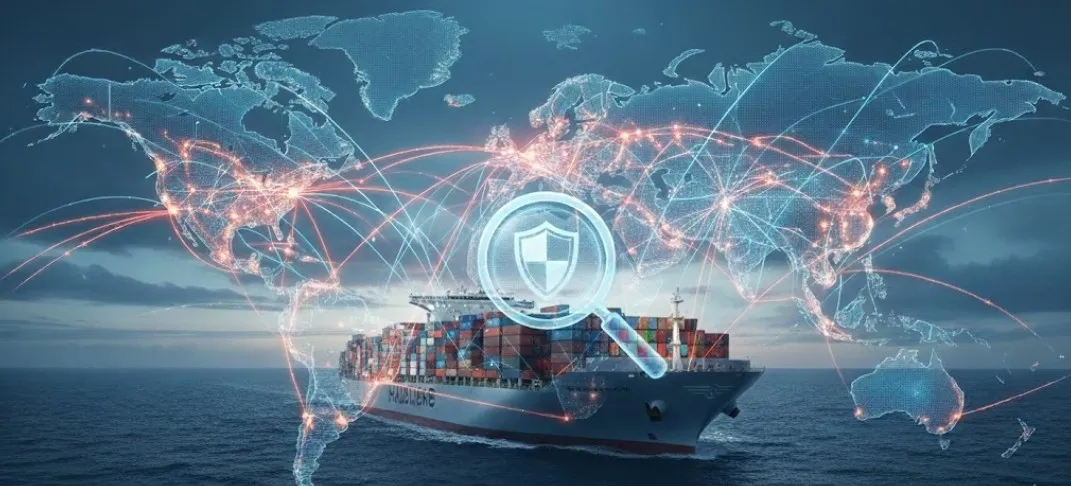
All of this requires connectivity. Data centres without reliable international bandwidth are warehouses. AI models that cannot access training data, serve inference requests, or synchronise with global cloud infrastructure are stranded assets. The economic value of the Gulf's digital investment is a function of its connectivity, and that connectivity now depends on infrastructure passing through active conflict zones with no proven alternative.
A further factor compounds the problem. The same geopolitical dynamics disrupting submarine cables are simultaneously disrupting energy supply (Hormuz closures affecting oil and LNG), food supply (46 percent of global urea trade bottled up behind the Strait), maritime insurance markets (war risk premiums surging across Red Sea routes), and now digital infrastructure. These are not parallel crises. They are the same crisis expressing itself across every critical supply chain simultaneously. Any analysis that treats the digital infrastructure problem in isolation is missing the systemic picture.
What This Means for Investors and Governments
For governments pursuing AI sovereignty strategies, the immediate priority is an honest assessment of connectivity resilience. The question is not whether the Gulf can build world-class data centres. It can, and it is doing so. The question is whether the data routes connecting those facilities to global networks can survive sustained geopolitical disruption. On current evidence, they cannot.
For investors and corporate boards with exposure to Gulf digital infrastructure, the risk calculus has shifted. Sovereign backing and abundant energy are necessary conditions for a viable data hub. They are not sufficient. Connectivity redundancy, route diversification through stable corridors, and contingency planning for prolonged submarine cable outages must now be factored into investment decisions.
For the technology companies that built capacity in the region, the force majeure declarations from Alcatel Submarine Networks are an early signal. If cable deployment remains suspended through 2026, the gap between installed compute capacity and available international bandwidth will widen. That gap represents stranded capital.
Ethos Chain's View
The Gulf's digital chokepoint crisis is an economic security problem dressed in technology language. It requires the same rigour, the same scenario planning, and the same strategic resilience frameworks that the region has applied, imperfectly but seriously, to its energy infrastructure for decades.
The states that recognise this earliest will be the ones that protect their digital investments. The ones that treat connectivity as someone else's problem will discover, as they are beginning to discover now, that the most sophisticated data centre in the world is only as valuable as the cable that connects it to the next continent.
For more information on how Ethos Chain can support your organisation's
economic security and digital infrastructure resilience planning, please get in touch.