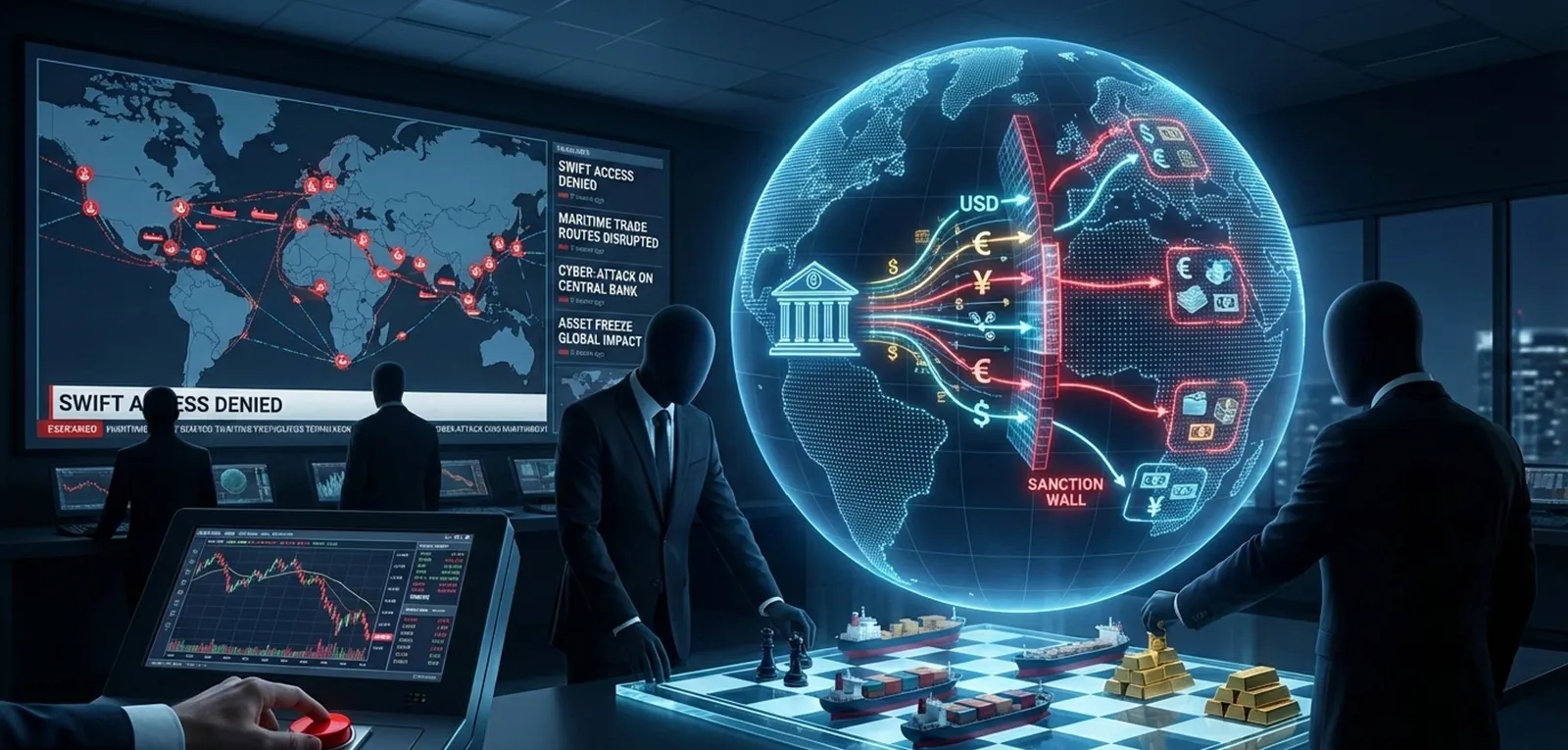
Financial Warfare and Corporate Exposure
Understanding the implications of sanctions regimes, financial restrictions, and economic statecraft for multinational operations.
Read Article →
December 2025 • 12 min read
By Spencer John, Chief Executive Officer
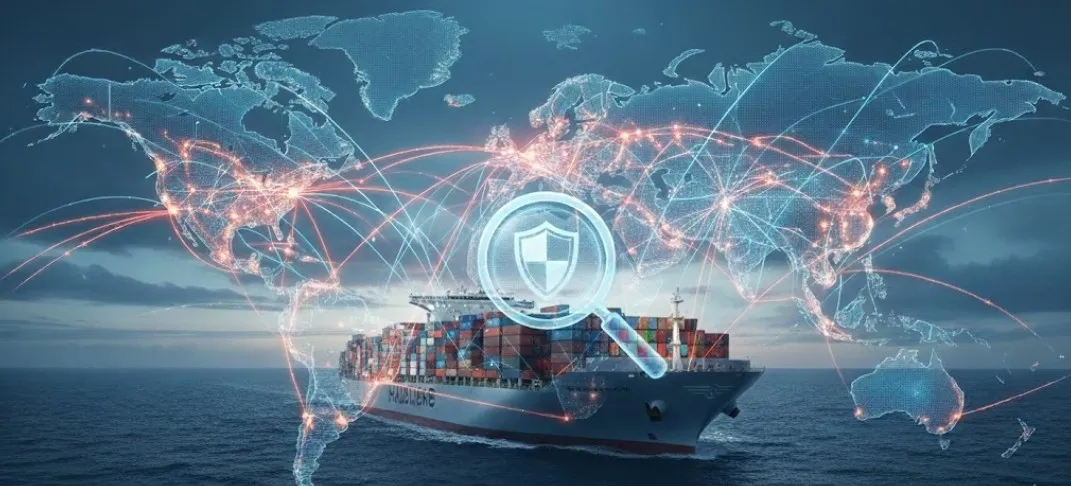
As supply chains become instruments of geopolitical competition, traditional approaches to supplier due diligence are proving inadequate. Organisations need new capabilities to verify claims, trace provenance, and identify hidden vulnerabilities before they become crises.
For decades, the prevailing logic of global supply chain management rested on a simple premise: efficiency trumps resilience. Organisations pursued the lowest-cost supplier, the leanest inventory, and the most streamlined logistics, assuming that global trade would remain fundamentally open and that political risk was something that happened elsewhere.
That assumption has been comprehensively dismantled. The events of recent years, from pandemic-induced semiconductor shortages to the weaponisation of energy supplies following Russia's invasion of Ukraine, have revealed the fragility beneath the efficiency. Ethos Chain has observed a fundamental shift in how governments and corporations now think about supply chains: as strategic assets that can be leveraged, disrupted, or denied, over and above their commercial function.
This shift demands a corresponding evolution in how organisations approach supply chain integrity. The annual supplier audit and the self-certification questionnaire, staples of traditional due diligence, are no longer fit for purpose. They were designed for a world where the primary risks were commercial: quality failures, delivery delays, financial instability. They are inadequate for a world where the risks are strategic: sanctions exposure, forced labour allegations, dependency on adversarial nations, and the deliberate manipulation of trade for political ends.
Consider the challenge facing a European manufacturer seeking to verify that its supply chain is free from components originating in Xinjiang, where credible allegations of forced labour have prompted import restrictions in multiple jurisdictions. The manufacturer may have a direct contractual relationship with a Tier 1 supplier in coastal China, but that supplier sources sub-components from a Tier 2 supplier in another province, which in turn procures raw materials from a Tier 3 supplier whose actual sourcing practices are opaque.
Traditional due diligence would involve requesting certifications from the Tier 1 supplier, perhaps conducting an on-site audit, and accepting representations about upstream sourcing. Such certifications frequently reflect what suppliers believe their customers want to hear rather than verified reality. The incentive structures are misaligned: suppliers face commercial pressure to provide reassurance, and customers face operational pressure to accept it.
This creates what might be termed a "verification gap": the distance between what organisations believe about their supply chains and what is actually true. For many organisations, this gap is substantial, and it is growing as supply chains become longer, more complex, and more politically contested.
Closing the verification gap requires new approaches that do not rely solely on supplier self-reporting. Adoption is growing of what might be termed "independent verification" methodologies: techniques that allow organisations to corroborate supplier claims using external data sources.
Satellite imagery has emerged as a particularly powerful tool. Commercial earth observation platforms now offer resolution sufficient to identify individual shipping containers, track vessel movements, and monitor industrial activity at specific facilities. This capability, once the exclusive domain of intelligence agencies, is now accessible to commercial organisations. A manufacturer concerned about the actual production capacity of a claimed supplier can examine imagery of the relevant facility, assess whether activity levels are consistent with claimed output, and identify anomalies that warrant further investigation.
Similarly, the integration of shipping data, including Automatic Identification System (AIS) tracking, with trade documentation allows organisations to verify that goods actually moved along claimed routes. Discrepancies between documented origins and observed vessel movements can reveal transshipment schemes designed to obscure true provenance.
Corporate registry data, beneficial ownership records, and sanctions screening provide another layer of verification. There are instances where supplier facilities, ostensibly independent, are ultimately controlled by entities with sanctions exposure or connections to state actors. Such connections are rarely visible in standard commercial documentation but can be surfaced through systematic analysis of corporate structures.
Most supply chain risk discussions focus on dependencies involving adversarial or contested nations: China, Russia, and states subject to comprehensive sanctions. This focus is understandable but incomplete. Some of the most consequential supply chain vulnerabilities involve dependencies on allied nations, where the assumption of reliability creates blind spots.
Taiwan's dominance in advanced semiconductor manufacturing is the most prominent example. The Taiwan Semiconductor Manufacturing Company (TSMC) produces an estimated 90% of the world's most advanced chips. This concentration exists precisely because Taiwan is an ally: decades of open trade allowed efficiency-driven consolidation without strategic concern. Yet the consequences of disruption, whether from natural disaster, pandemic, or military conflict, would be catastrophic for industries worldwide.
Similar concentrations exist across allied supply chains: specific pharmaceutical precursors, aerospace components, and specialised industrial equipment. Organisations that have systematically mapped their exposure to adversarial nations may have overlooked equally significant single points of failure in friendly jurisdictions. The risk is structural rather than political. Concentration creates fragility regardless of the political alignment of the concentrated supplier.
The traditional model of supply chain due diligence is episodic: an audit is conducted, findings are documented, corrective actions are agreed, and the process repeats on an annual cycle. This approach made sense when supply chain risks were relatively stable and primarily commercial. It is inadequate for a world where risks are dynamic, political, and potentially sudden.
Ethos Chain advocates for a shift from episodic audit to continuous assurance. This involves establishing ongoing monitoring capabilities that can detect changes in risk posture as they emerge, rather than discovering them during the next scheduled review. Changes in corporate ownership, shifts in trade patterns, new sanctions designations, and emerging geopolitical tensions should trigger immediate assessment, not wait for the annual audit cycle.
Implementing continuous assurance requires investment in both technology and expertise. Automated monitoring tools can track sanctions lists, corporate registries, and adverse media in real time. Interpreting the outputs (distinguishing real risks from false positives, assessing materiality, and determining appropriate responses) requires human judgement informed by sector experience.
The disruptions of recent years offer instructive lessons for organisations seeking to strengthen supply chain integrity.
First, the organisations that came through the semiconductor shortages most successfully were those that had invested in understanding their supply chains beyond immediate contractual relationships. They knew who their suppliers' suppliers were, and where the critical chokepoints existed.
Second, the speed of sanctions implementation following Russia's invasion of Ukraine caught many organisations unprepared. Those with pre-existing sanctions compliance infrastructure adapted relatively quickly; those without found themselves scrambling to understand their exposure while simultaneously trying to comply with rapidly evolving requirements.
Third, the reputational consequences of supply chain failures have intensified. Allegations of forced labour in supply chains, even when vigorously disputed, can trigger immediate commercial consequences including import seizures, customer defection, and sustained activist pressure. The time available to respond has compressed dramatically.
Supply chain integrity in an age of strategic competition requires a fundamentally different approach than the efficiency-focused optimisation of previous decades. Ethos Chain recommends that organisations address the following priorities:
Visibility must extend beyond Tier 1 suppliers. Understanding the full depth of supply chains, including raw material origins and processing locations, is essential for managing both compliance requirements and strategic risks.
Verification must become independent. Reliance on supplier self-certification is insufficient. Organisations should develop or access capabilities to corroborate supplier claims using external data sources.
Monitoring must become continuous. Episodic audits cannot keep pace with dynamic risk environments. Real-time awareness of changes in ownership, sanctions exposure, and geopolitical developments is now necessary.
Concentration risk must be assessed comprehensively. Dependencies on allied nations deserve the same scrutiny as dependencies on adversaries. Structural fragility is agnostic to political alignment.
The era of comfortable assumptions about supply chain stability has ended. Organisations that invest in supply chain integrity as a strategic capability, beyond any compliance requirement, will be better positioned for the disruptions ahead.
For more information on how Ethos Chain can support your organisation's supply chain integrity and economic security requirements, please get in touch.
Understanding the implications of sanctions regimes, financial restrictions, and economic statecraft for multinational operations.
Read Article →
The strategic implications of concentrated mineral supply chains and emerging responses from governments and corporations.
Read Article →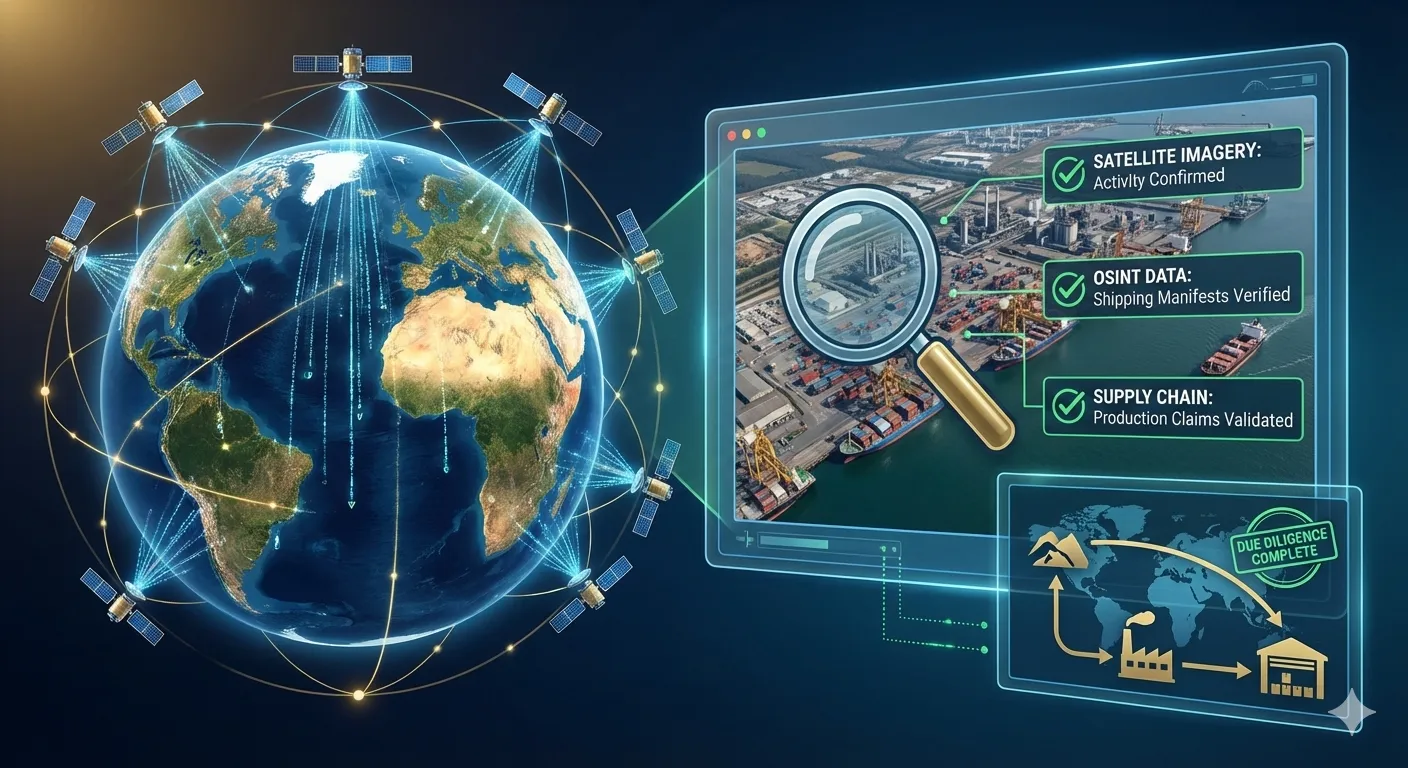
The emerging role of earth observation and OSINT in verifying industrial activity and supply chain claims.
Read Article →