
Why Most Transformations Fail and What to Do About It
Lessons from decades of major programme delivery on what distinguishes success from failure.
Read Article →
September 2025 • 6 min read
By Spencer John, Chief Executive Officer
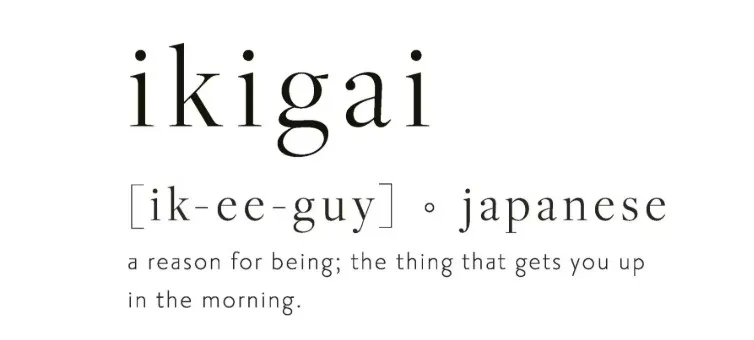
How organisations can move from aspirational purpose statements to embedded values that guide decision-making. The ikigai framework applied to corporate strategy.
Over the past decade, corporate purpose has become an industry unto itself. Consultancies offer purpose definition workshops. Branding agencies craft purpose statements. Annual reports prominently feature purpose articulations alongside financial results. The language of purpose permeates corporate communications, from recruitment materials to investor presentations.
Yet Ethos Chain has observed a persistent gap between articulated purpose and operational reality. Organisations invest significantly in defining and communicating values, but these values frequently fail to influence actual decisions. When commercial pressure conflicts with stated values, commercial pressure typically prevails. The purpose statement becomes an aspirational artefact: prominently displayed and practically inert.
This gap is not primarily a failure of sincerity. Most organisations intend their values to guide behaviour. The failure is operational: a failure to translate abstract statements into concrete decision frameworks, governance mechanisms, and accountability structures.
One reason values fail to guide decisions is that they are typically formulated to achieve consensus rather than to differentiate. Values that everyone can agree with are, almost by definition, values that will not constrain behaviour in practice.
Consider how many organisations claim values such as "integrity," "excellence," "innovation," or "customer focus." These are unobjectionable, and therefore operationally meaningless. No organisation would claim to value mediocrity, stagnation, or customer indifference. Values that everyone shares cannot guide choices between competing courses of action, because they do not indicate which considerations should take priority when trade-offs arise.
Operationally meaningful values create real constraints: they rule out options which might otherwise be commercially attractive. A genuine commitment to environmental sustainability means declining certain business opportunities. A genuine commitment to ethical supply chains means accepting higher costs. If a stated value never results in a decision that trades off short-term commercial advantage, that value is decorative rather than operational.
The Japanese concept of ikigai, often translated as "reason for being", offers a useful framework for thinking about authentic organisational purpose. Ikigai sits at the intersection of four elements: what you love, what you are good at, what the world needs, and what you can be paid for.
Applied to organisations, this framework suggests that authentic purpose must satisfy multiple criteria simultaneously. It must align with genuine organisational capabilities (what you are good at). It must address real needs in the world (what the world needs). It must be commercially sustainable (what you can be paid for). And it must resonate with the genuine motivations of the people within the organisation (what you love, in the collective sense).
Purpose that fails to satisfy all four criteria tends to be unstable. Purpose without commercial sustainability is charity, not strategy. Purpose without genuine capability is aspiration without credibility. Purpose that does not address real needs is self-indulgence. And purpose that does not resonate internally will not be sustained through difficulty.
Moving from aspirational values to operational values requires several concrete steps.
First, values must be translated into decision criteria. Abstract values need to be converted into specific guidance for specific decision contexts. "We value sustainability" becomes "we will not enter supply relationships with facilities that do not meet defined environmental standards, even if they offer lower costs." The value becomes operational when it explicitly rules out options.
Second, governance must reinforce values. If values are to influence decisions, the decision-making process must create space for values-based considerations. This may mean including values-alignment as an explicit criterion in investment decisions, requiring values-impact assessment for major initiatives, or establishing governance checkpoints where values-based objections can be raised.
Third, incentives must align with values. If performance management and compensation reward only commercial outcomes, commercial outcomes will dominate. Organisations serious about values find ways to recognise and reward values-aligned behaviour, even when it comes at commercial cost.
Fourth, leadership must model values-based trade-offs. Values become credible when leadership visibly makes decisions that prioritise values over short-term advantage. A single prominent decision where values prevail over commercial pressure does more to embed values than years of communications.
The ultimate test of whether values are operational is what happens when they conflict with other considerations. Real values create real conflict, and that conflict, properly managed, is a sign of health rather than dysfunction.
When everyone agrees on a course of action, values are not being tested. Values are tested precisely when they point in a different direction than commercial convenience, competitive pressure, or conventional practice. Organisations with operational values expect such conflicts to arise regularly and have developed the capability to resolve them thoughtfully.
This does not mean that values should always prevail regardless of consequences. Trade-offs are inherent in any complex decision. But it does mean that values should be explicitly weighed in the trade-off analysis, that departures from values should be conscious and justified rather than unconscious and routine, and that patterns of values-compromise should trigger reflection about whether stated values remain credible.
Purpose and values have become ubiquitous in corporate discourse, and correspondingly devalued. The proliferation of purpose statements has bred cynicism, as stakeholders observe the gap between articulated ideals and operational reality.
Organisations that wish to distinguish themselves do so by making values operational: by creating the decision frameworks, governance mechanisms, and accountability structures that translate abstract aspirations into concrete constraints.
The organisations that succeed in this will find that operational values are strategic assets: sources of coherence, differentiation, and resilience that competitors who treat values as decorative cannot easily replicate.
For more information on how Ethos Chain can support your organisation's strategic transformation and purpose development, please get in touch.
Lessons from decades of major programme delivery on what distinguishes success from failure.
Read Article →
How advanced analytics and intelligence are transforming supply chain verification.
Read Article →
Understanding the implications of sanctions regimes for multinational operations.
Read Article →